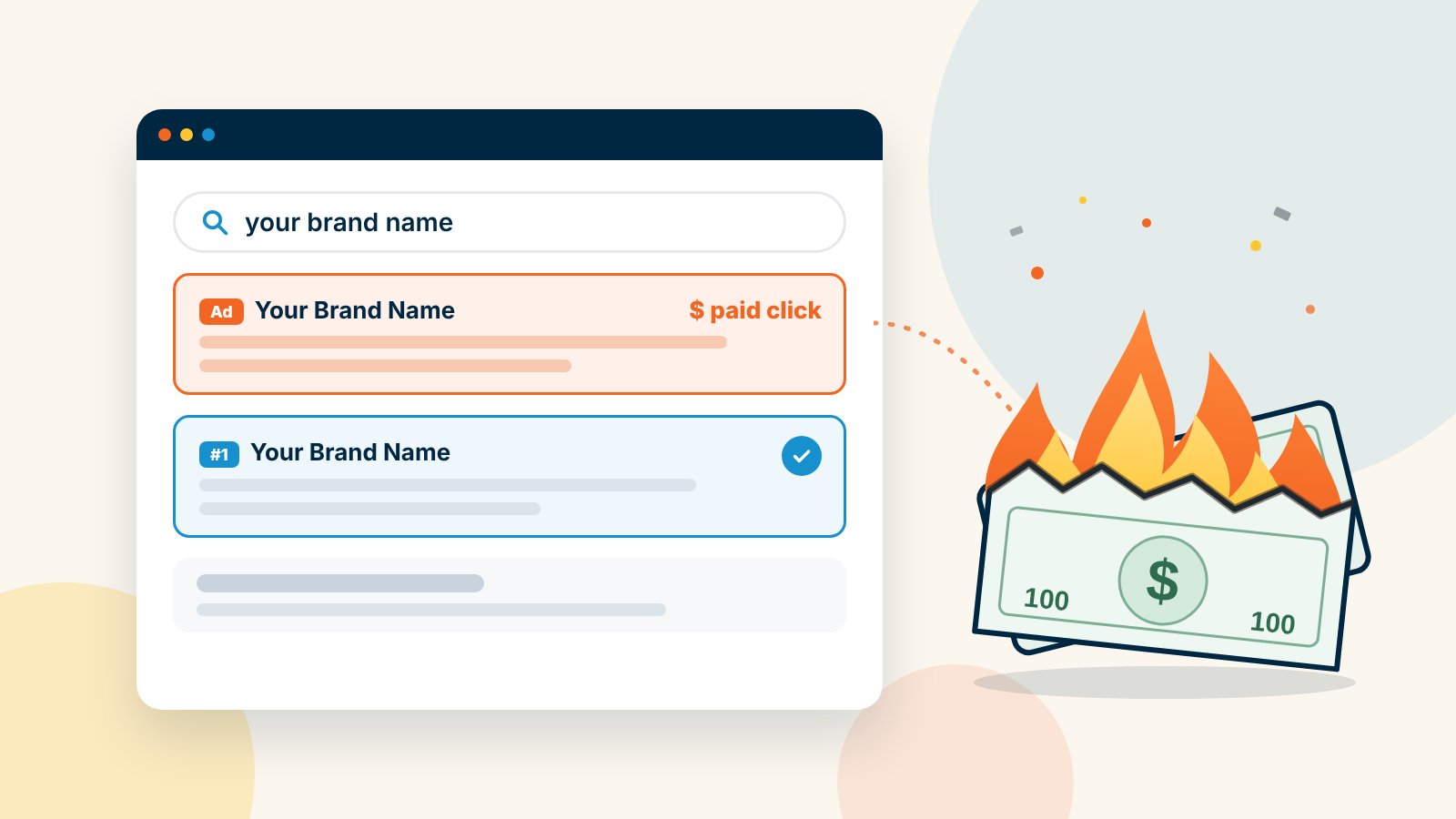
You want an easy way to make a Google Ads account seem efficient? Load it up with easy-to-get brand conversions.
When a customer searches for your brand name and you have an ad that targets the brand, you’re right there at the top of the page. It’s an easy match, an easier click, and conversions keep climbing. On paper, your account looks great since the campaigns generate leads.
When Branded Search Traffic Starts Consuming Your Nonbrand Budget
The Flint Search Team ran into that question while managing paid search for a multifamily client with properties across several markets. We weren’t running dedicated brand campaigns, but branded searches were still making their way into the account. Someone could search for an apartment community's exact name, click our Google ad, and we mark it as a conversion. Even though the exact same property was right below the ad.
For a long time, we were comfortable allowing some branded searches into the campaigns.
After all, someone could hear about an apartment community from a friend, drive past the property and see a sign, or encounter the name somewhere offline. Then they search for the name later, see our ad, and convert.
But the more we looked at the search behavior, the more we questioned whether paid search was really introducing these people to the properties. For instance, someone searching for that exact name could already have taken a tour and be looking for leasing information. Or they could be a current resident looking for the rent payment portal.
There are just too many cases in a branded search that differ greatly from someone searching for “apartments in Carmel, Indiana” or “two-bedroom apartments near Indianapolis”. That distinction became especially important when we looked at how much money was involved.
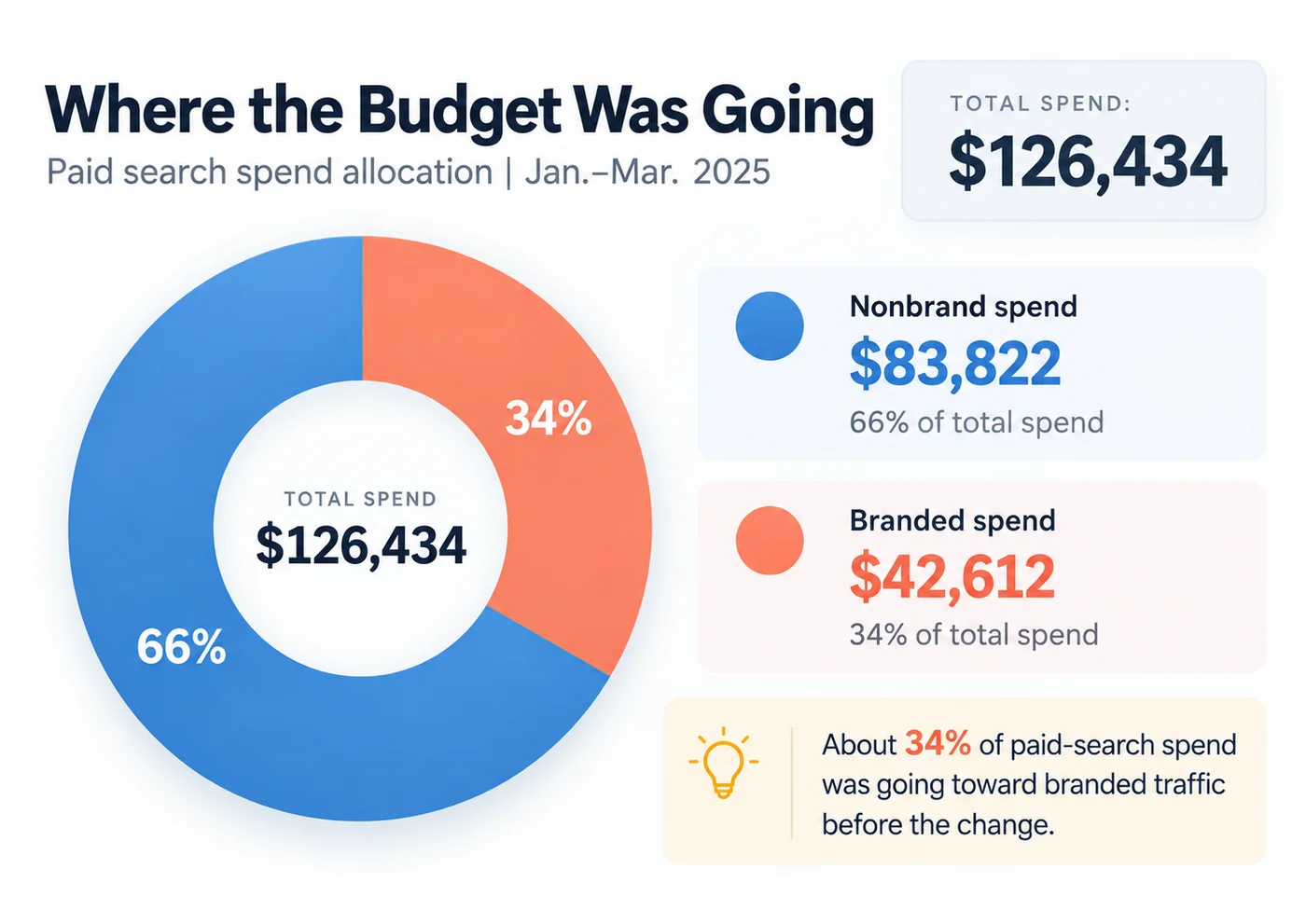
From January through March 2025, the account spent about $126,434 and generated 4,163 conversions.
Of that, the nonbrand portion accounted for about $83,822 in spend and 2,773 conversions.
That meant approximately $42,612—more than one-third of the account’s paid-search spend—was associated with branded traffic, accounting for about 1,390 conversions.
That got our attention.
Brand Search Is Your Budget’s Worst Enemy
Many of our nonbrand campaigns were budget-constrained, and we were approaching the summer leasing season, when apartment demand typically picks up. Every dollar spent on brand search was a dollar that couldn't be used to reach another renter searching more broadly for an apartment. How can we be better stewards of our client’s budget?
First, we looked at what happened when someone searched for a property by name. In most cases, the property already owned prominent organic real estate in Google search results. Without a paid ad listing. The property still had a website listing at #1, a Google Business Profile, and pages on listing sites like Zillow and Apartments.com. Another spot was unneeded overkill.
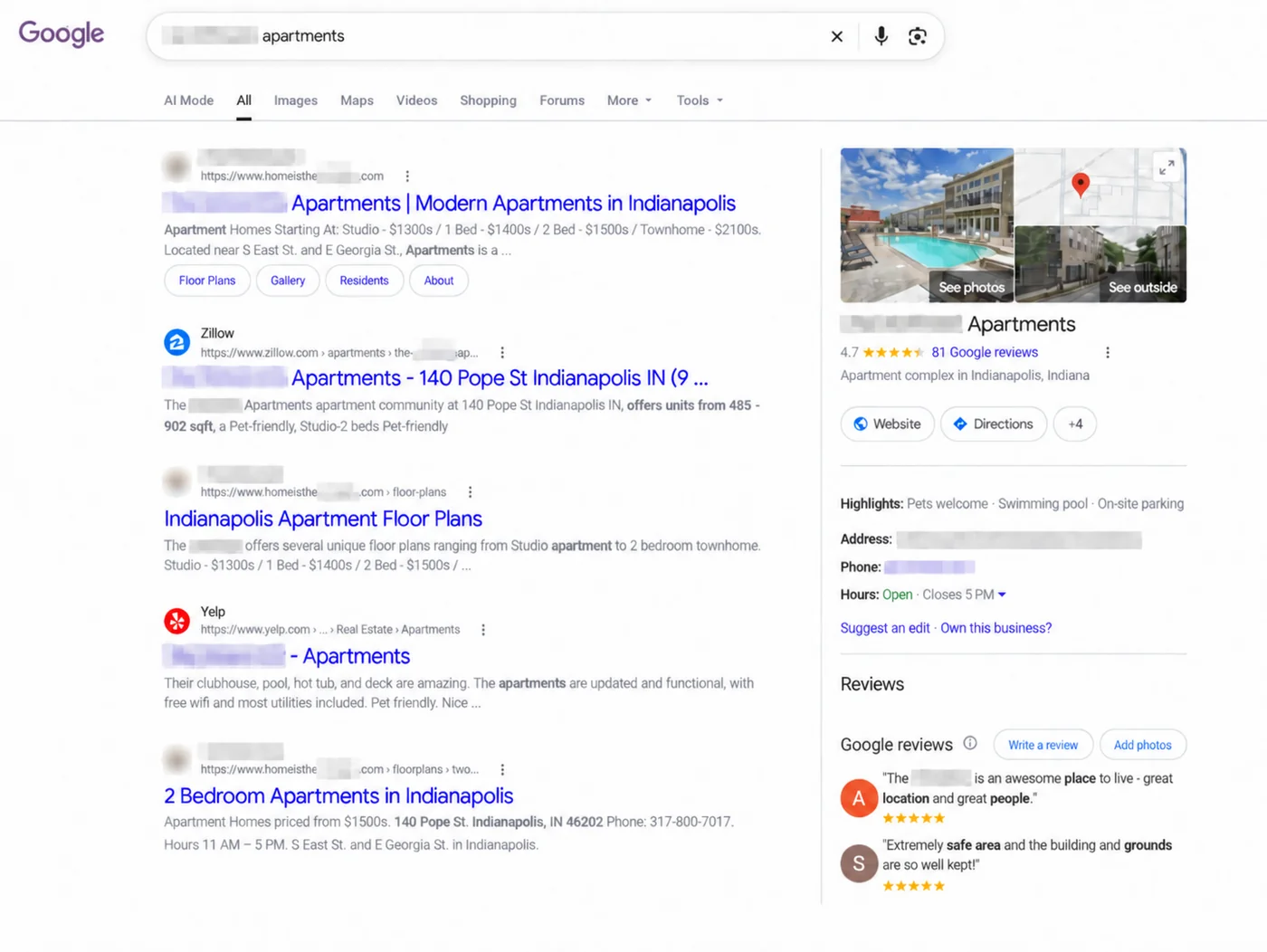
Example search landscape: This was the kind of search landscape that made us stop and ask: are we paying for visibility we already have?
What Happened When We Prioritized Nonbrand Searches
To eliminate branded ads, we implemented campaign-level negatives and directed the account's paid-search dollars more deliberately toward nonbrand demand. From May through July, after the change was implemented, paid-search spend increased to $135,703. More importantly, Conversions increased by 25%.
Meanwhile, cost per lead (CPL) improved from roughly $30.37 to $26.14, a decrease of about 14%.
And because branded search traffic had been removed, that later spend was being directed toward the nonbrand opportunities we wanted to prioritize.
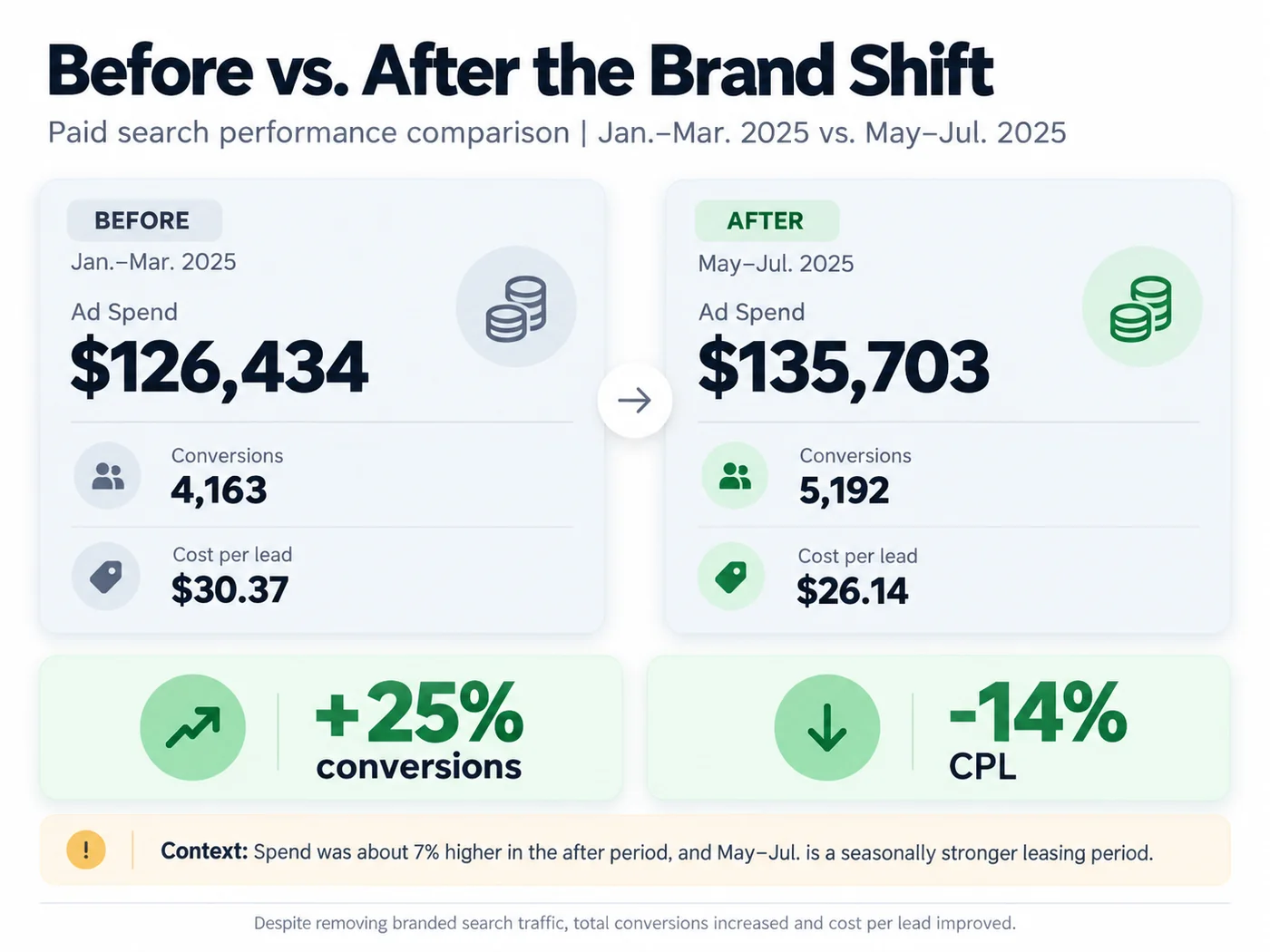
May–July is a seasonally stronger leasing period, and spend was 7% higher.
Did Organic Search Pick Up the Slack?
To find out, we turned to Google Analytics 4 (GA4).
From January–March to May–July, organic-search sessions increased only about 2%, while organic-search key events increased approximately 29%.
Again, we can't attribute that entire increase to removing paid brand traffic. Seasonality likely played a role, and GA4 cannot tell us that those conversions came specifically from branded organic searches.
But what we didn't see was evidence that organic search suddenly collapsed when we stopped paying for those branded clicks.
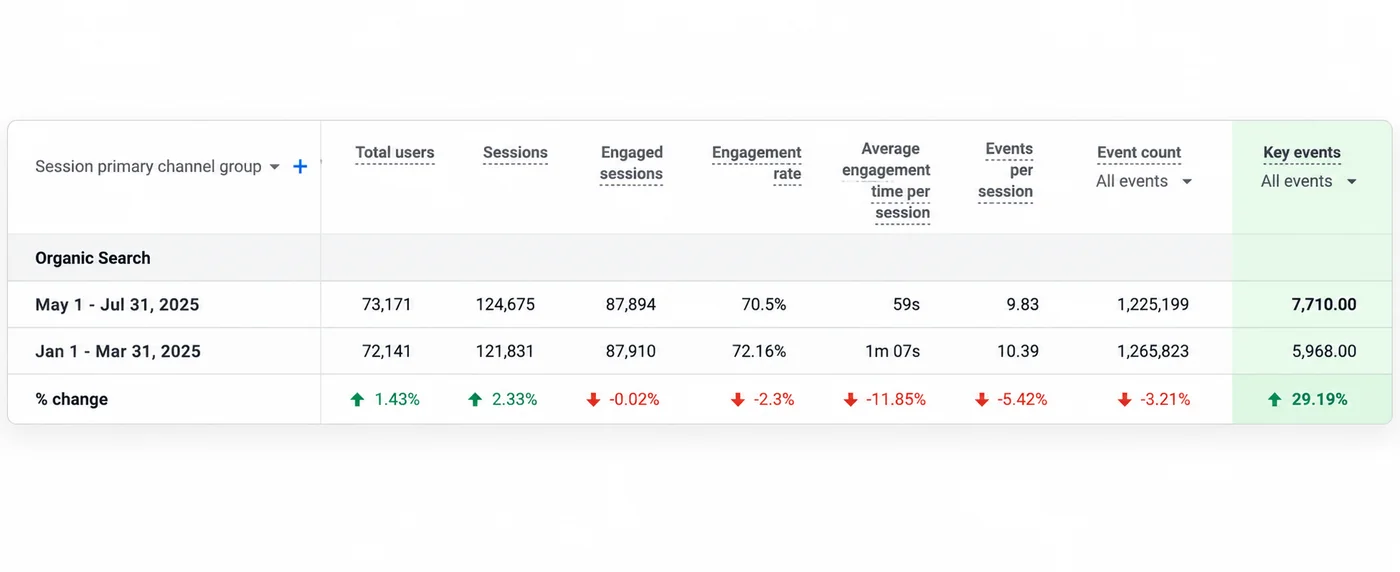
Organic-search key events increased 29% in the post-change period, although seasonality and other factors also contributed.
Lesson: Branded Google Ads Leads Aren't Always Incremental Leads
The biggest lesson from this wasn't that everyone should immediately stop bidding on their brand. Instead, the lesson is the question the paid search team should be asking. Hint: it’s not “Which ad received credit for the conversion?”
Would you have gotten this customer without paying for the click?
If nonbrand campaigns are being restricted by budget, why spend thousands of dollars on people who already know your company's name? It may be worth taking a closer look at how that money is being allocated.
Now, search landscapes can change. Competitors could start bidding on your name, which forces you to increase brand ad spend. Organic search may get overhauled in the new AI environment. Your own budget can fluctuate, and brand can be a better investment. But that’s why your paid search should never be “set it and forget it.”
Good Google Ads management isn't just about getting the lowest CPL on the dashboard. It's about making sure your advertising dollars are doing something your business actually needs them to do. And that means knowing when not to pay for the click.
Is Brand Worth It In Your Paid Search?
Wondering how much of your Google Ads budget is going to people who already know your name? Flint Analytics can audit your search terms, brand overlap, and nonbrand opportunities, then help you put every dollar where it actually grows your business. Let's talk about your paid search.